Set on a sweeping plain just outside Meknes, the ancient Roman city of Volubilis is one of Morocco’s most extraordinary archaeological sites. With its remarkably preserved mosaics, monumental arches, and panoramic landscapes, Volubilis offers a vivid glimpse into life at the far edge of the Roman Empire. Today, it stands proudly as a UNESCO World Heritage Site and a must‑see destination for travelers exploring northern Morocco.
Why Volubilis Matters?
The History of Volubilis
Early Beginnings
Volubilis was first settled in the 3rd century BC, long before the Romans arrived. Its fertile land and strategic location made it an important center for agriculture and trade.
Roman Prosperity
The city flourished under Roman rule in the 1st and 2nd centuries AD. Its wealth came primarily from olive oil production, which was exported across the Empire. At its peak, Volubilis was home to around 20,000 residents, including Romans, Africans, Jews, and Mediterranean settlers.
Despite being far from Rome, Volubilis developed into a sophisticated provincial capital with:
- Luxurious villas
- Public baths
- Temples
- A basilica
- A triumphal arch
- A bustling forum
After the Romans
Around 280 AD, the Romans withdrew from Volubilis due to its remote location. Yet the city continued to thrive:
- Early Christians lived here
- Later, it became an important center for the Idrisid dynasty, the first Islamic state in Morocco
- By the 11th century, the political center shifted to Fez, and Volubilis was gradually abandoned
Earthquake & Rediscovery
A major earthquake in the 18th century toppled many structures, and stones were taken to build palaces in Meknes. Excavations in the 20th century revealed the stunning mosaics and monuments that make Volubilis famous today.
What to See in Volubilis
1. Decumanus Maximus (Main Street)
This grand avenue once connected the city’s most important buildings. Today, it leads visitors past:
- The Triumphal Arch
- Remains of the aqueduct
- Columns of the forum
- Temples and administrative structures
2. The Triumphal Arch of Caracalla
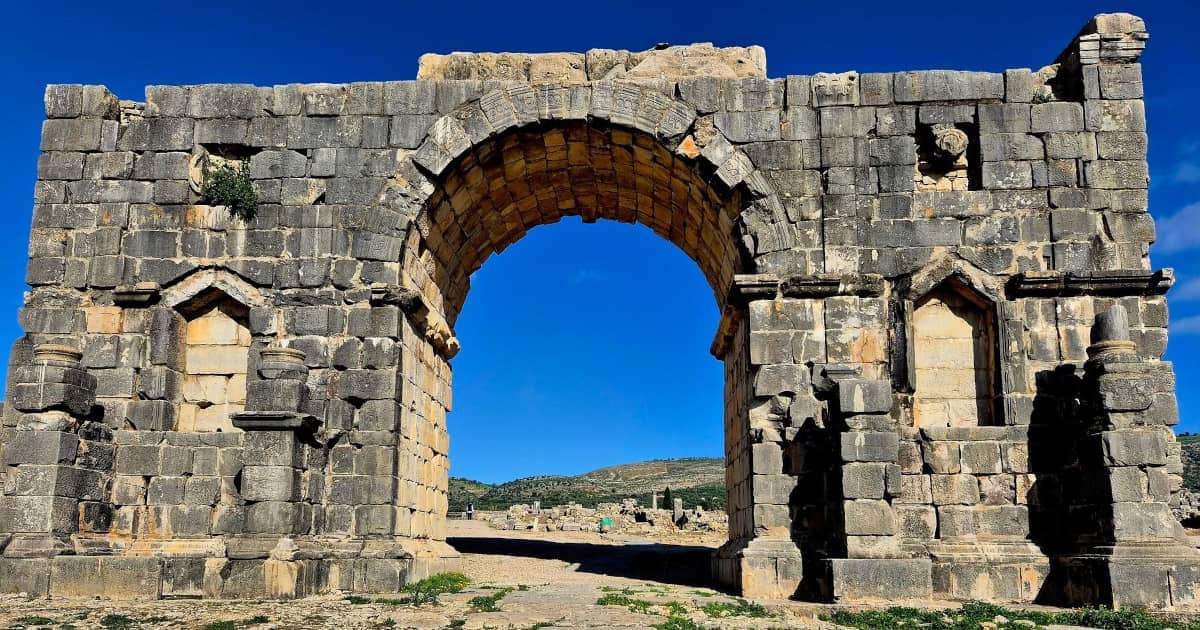
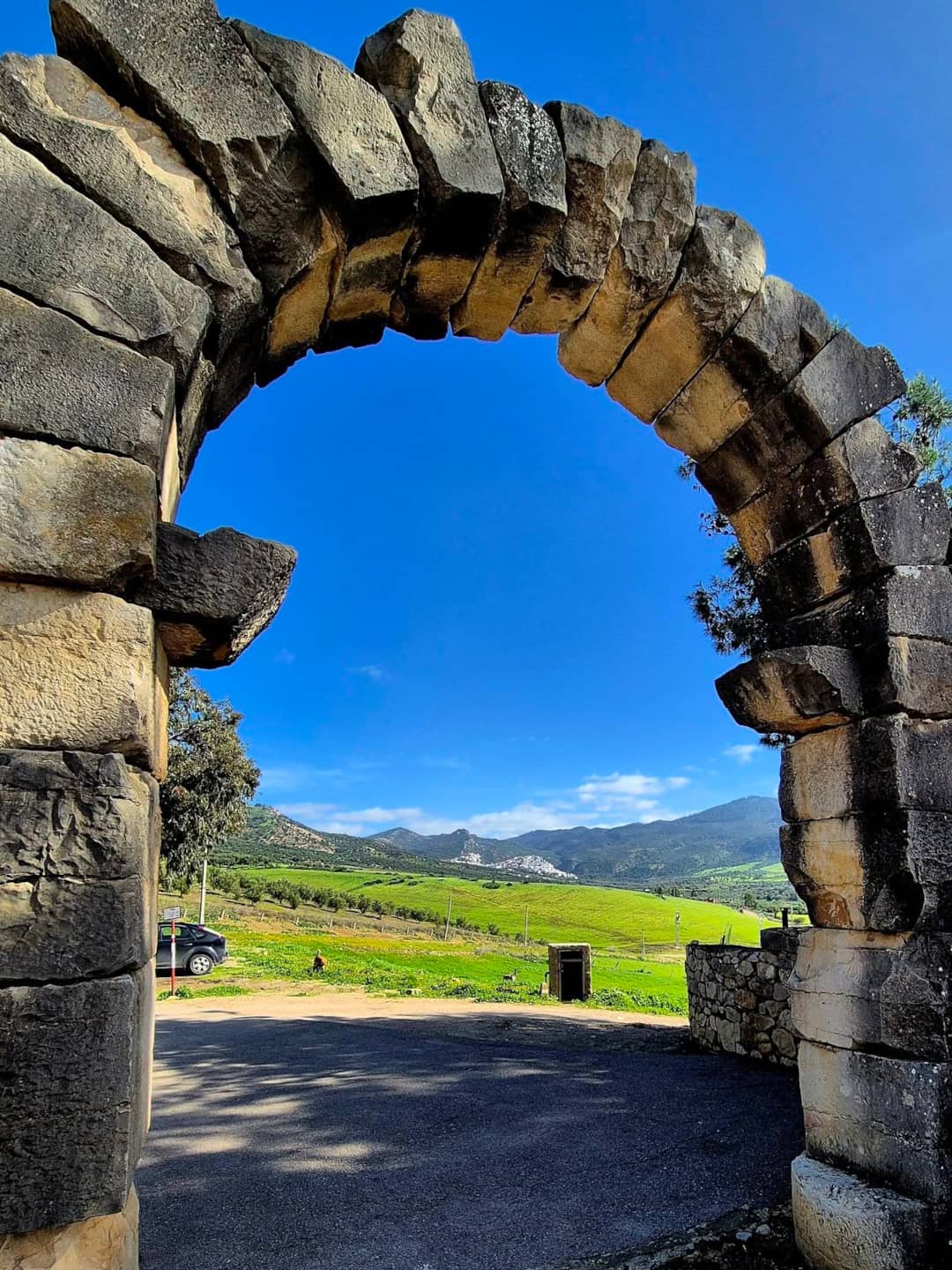
Built in 217 AD, this arch honored Emperor Caracalla, who granted Roman citizenship to all free inhabitants of the Empire. Originally topped with a bronze chariot, it remains one of the most iconic structures in Volubilis.
3. The Forum and Basilica
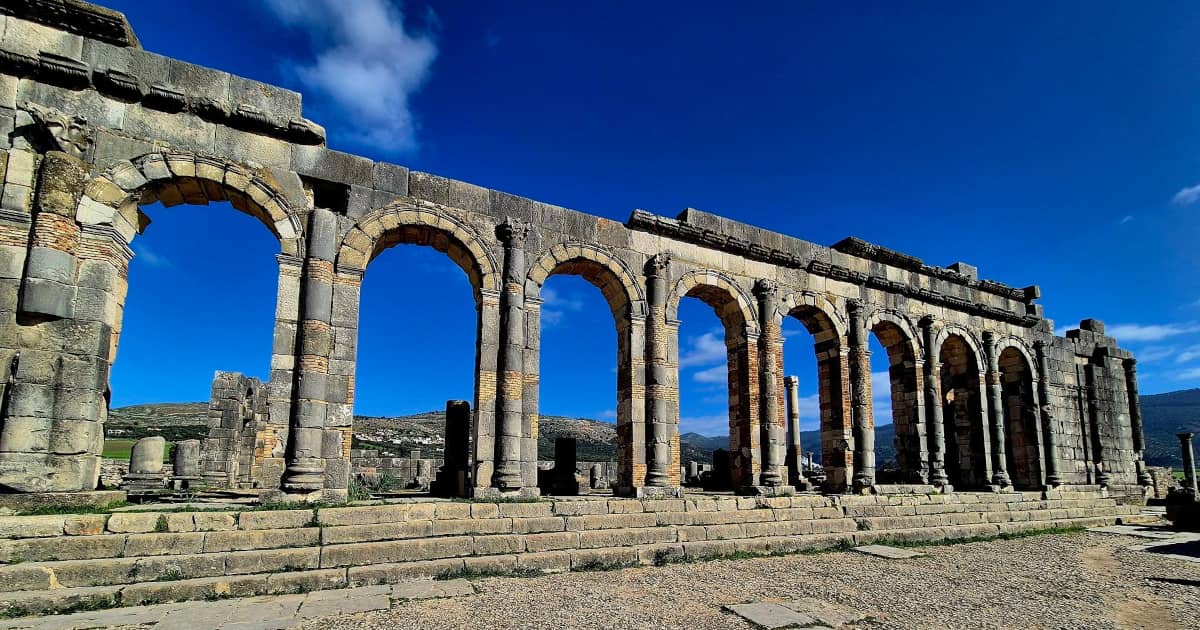
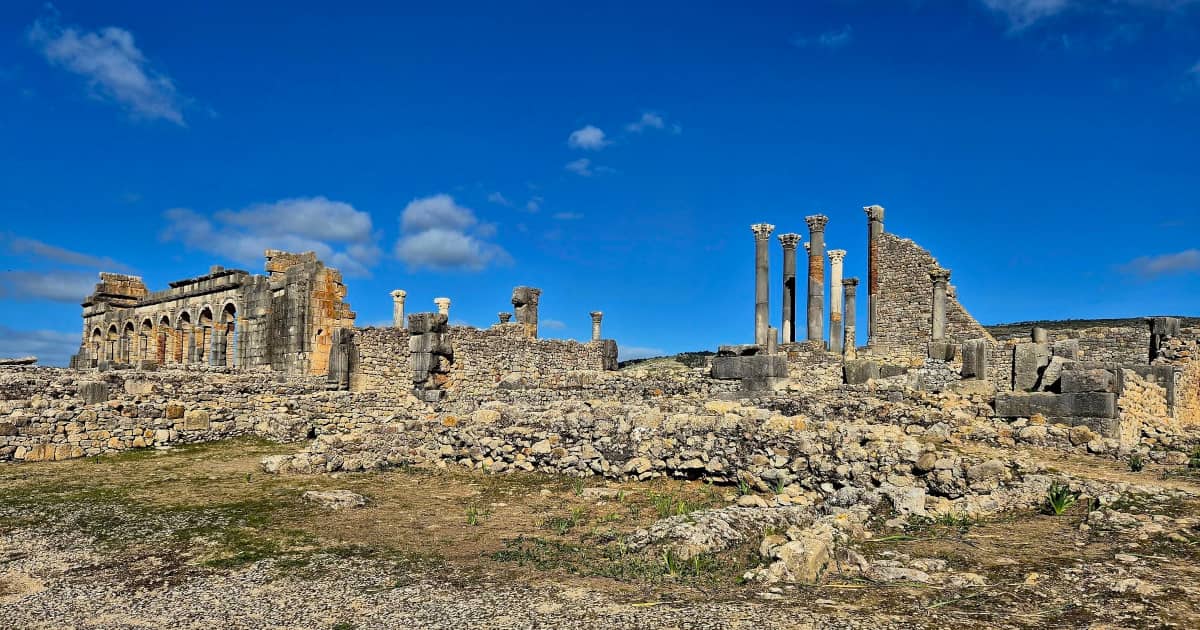
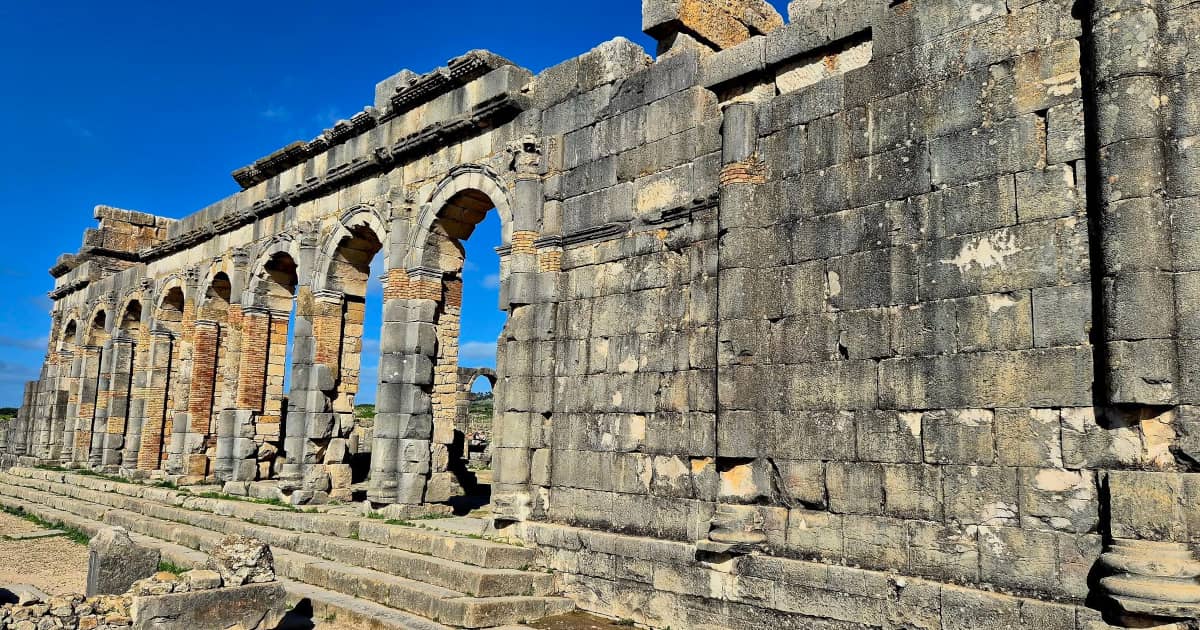
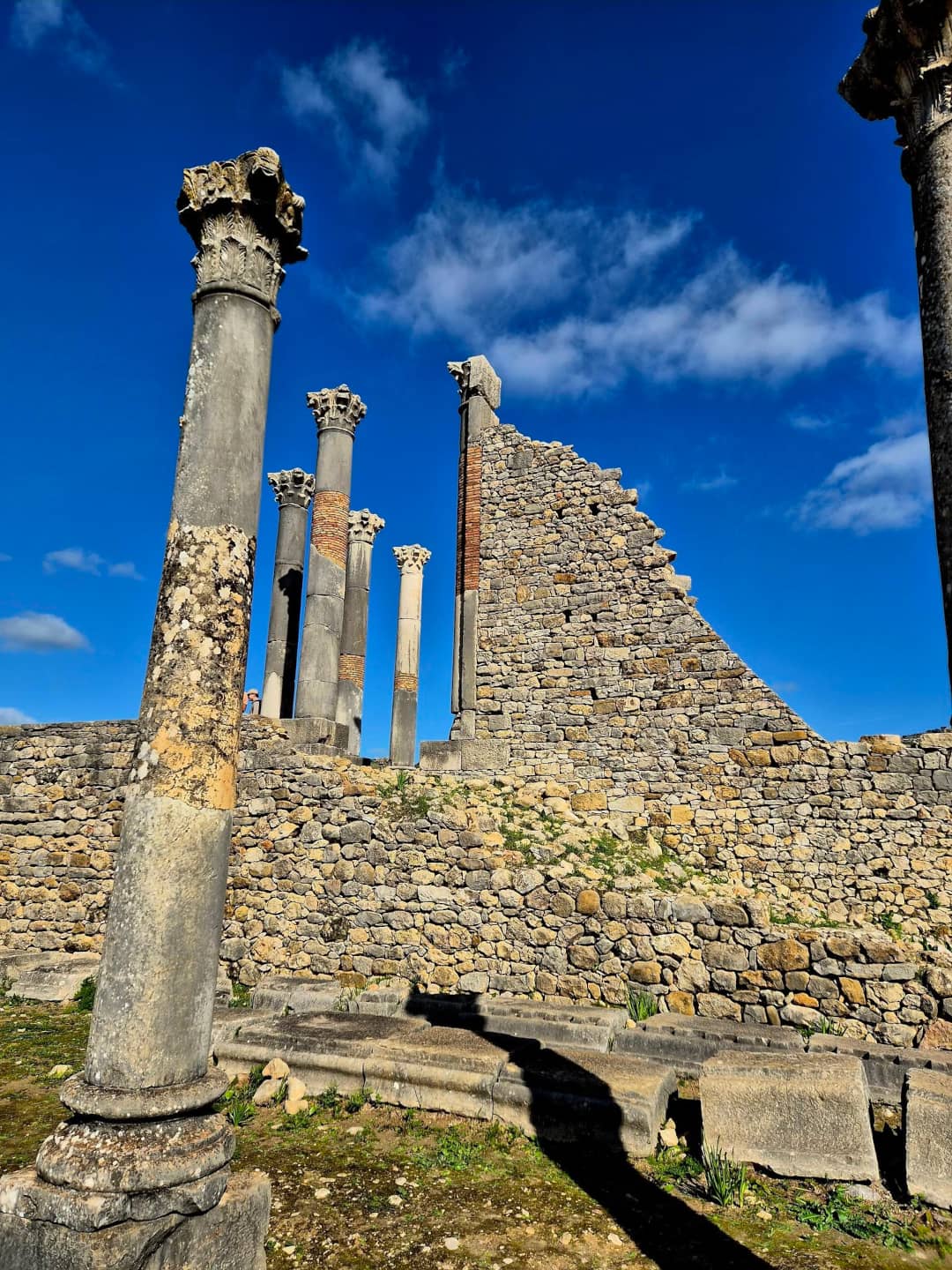
The forum was the heart of public life, while the basilica served as the administrative center. The remaining arches and columns reveal the impressive scale of these buildings.
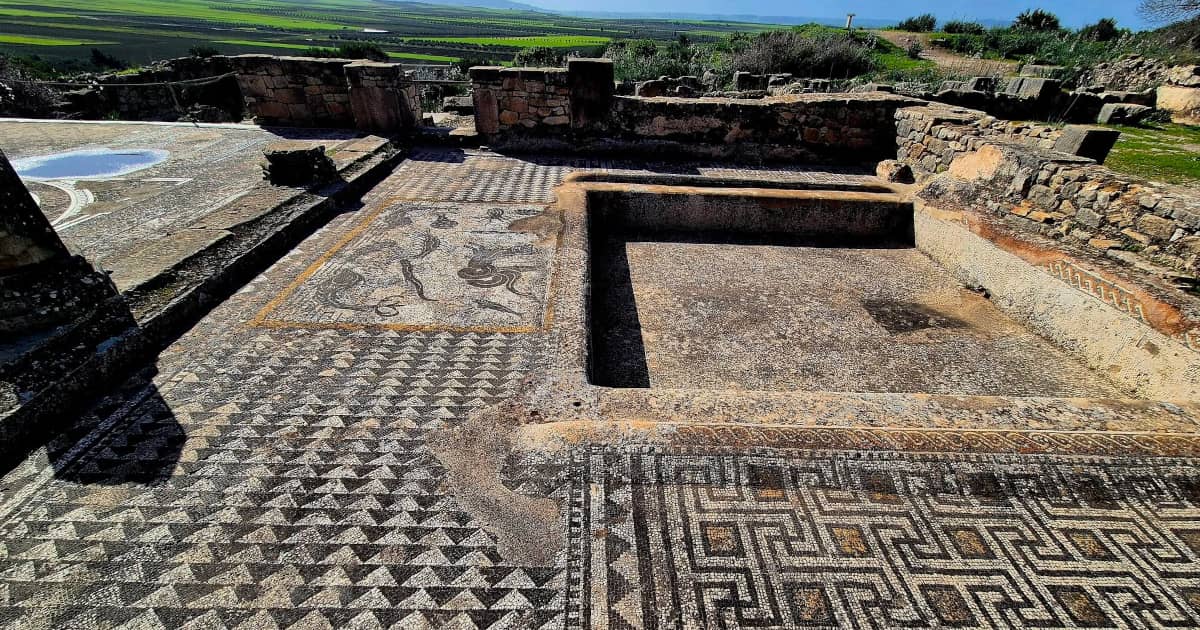
4. The Famous Roman Villas & Mosaics
Volubilis is renowned for its exceptionally preserved mosaics, many still in their original locations.
5. The Capitoline Temple
Dedicated to Jupiter, Juno, and Minerva, this temple was a major religious gathering place. The altar still stands at the foot of the temple steps.
House of Orpheus
Features a detailed mosaic of Orpheus playing the lyre, surrounded by animals.
House of the Labors of Hercules
One of the largest villas, with a mosaic depicting the 12 labors of Hercules.
House of Dionysus and the Four Seasons
A colorful mosaic representing the four seasons and scenes from Roman mythology.
Olive Oil Press
A reconstructed press shows how olive oil — the city’s economic engine — was produced.
Why Visit Volubilis?
Volubilis is more than a collection of ruins — it’s a living story carved in stone. Visitors come for:
- Its breathtaking mosaics
- Its peaceful rural setting
- Its historical significance
- Its accessibility from Meknes and Fez
If you’re exploring Morocco’s imperial cities, consider our curated journeys:
Practical Tips for Visiting Volubilis
Visit Early
Temperatures rise quickly, especially in summer. Morning visits are cooler and quieter.
Bring Water & Sun Protection
There is almost no shade on the site. A hat, sunscreen, and water are essential.
Wear Comfortable Shoes
The terrain is uneven, and you’ll be walking across large areas.
Hire a Local Guide
There is minimal signage inside the site. A knowledgeable guide can enrich your visit with stories and historical context.
Frequently Asked Questions About Volubilis
What is Volubilis?
Volubilis is an ancient Roman city near Meknes, known for its mosaics, temples, villas, and triumphal arch. It is a UNESCO World Heritage Site and one of Morocco’s most important archaeological sites.
How old is Volubilis?
The site dates back to the 3rd century BC and flourished under Roman rule in the 1st and 2nd centuries AD.
How long does a visit take?
Most visitors spend 1.5 to 2 hours exploring the ruins and mosaics.
Is Volubilis worth visiting?
Absolutely. It is one of the best-preserved Roman sites in North Africa and offers a unique window into ancient Moroccan history.
How do you get to Volubilis?
Volubilis is a 30-minute drive from Meknes and about 1.5 hours from Fez. Private tours are the most convenient option.
What should I bring?
Water, sunscreen, a hat, and comfortable walking shoes.
Do you need a guide?
A guide is not required but highly recommended due to the lack of on-site information panels.
Written by Hassane Assou — Senior Tour Guide
Discover Other Popular Travel Destinations
22 Incredible Destinations | Agadir | Marrakesh | Fez | Meknes | Volubilis | Rabat | Casablanca | Tangier | Chefchaouen | Asilah | Essaouira | Taroudant | Ouarzazate | Ait Benhaddou | Atlas Mountains | Boumalne Dades | Todra Gorge | Kalaat M’Gouna | Amtoudi | Tafraout | Moroccan Desert | Merzouga | Zagora | Draa Valley
More Helpful Information | Expert Insights & Tips
Morocco Tour Ideas | Best Morocco Tour Styles | Morocco Travel Insights